





Shop Exclusive
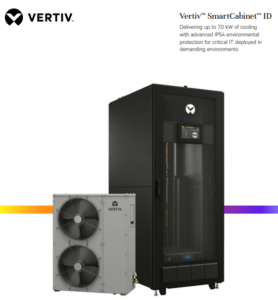
A Micro Data Center (MDC) is a compact, self-contained data center unit that includes all the core components of a traditional data center power, cooling, servers, storage, networking, power, cooling, and security but in a small, enclosed cabinet or rack.
Only 1 left in stock
Call for Price
A micro data center is a compact, self-contained data center that delivers full IT capabilities in a small footprint, ideal for edge computing and localized data processing.
Definition and Overview
A micro data center (MDC) is essentially a miniature version of a traditional data center. Key points:
- Compact and Modular – Often packaged in a single enclosure or rack, making it easy to deploy in remote or space-constrained locations
- Full IT Capabilities – Includes servers, storage, networking, power, and cooling systems—basically everything needed to run applications locally.
- Edge Computing – Perfect for processing data close to where it’s generated (e.g., IoT devices, retail stores, manufacturing plants), reducing latency and bandwidth usage.
- Rapid Deployment – Since it’s pre-engineered and pre-tested, installation can be much faster than building a traditional data center.
- Use Cases – Remote offices, smart cities, telecom base stations, industrial automation, and disaster recovery.
In short, micro data centers bring the power of centralized IT closer to the point of action, enabling faster decisions and more efficient data handling.
Key Components
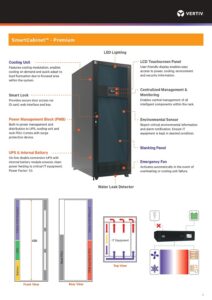
Micro data centers integrate the following critical elements:
- Servers and Storage: Provide computing power and data storage locally.
- Networking Equipment: Ensures connectivity and data transfer within the MDC and to external networks.
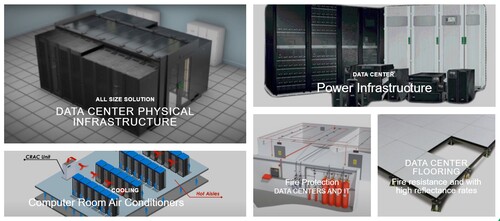
- Power Systems: Includes Uninterruptible Power Supply (UPS)and rack power distribution units (rPDU) to maintain continuous operation.
- Cooling Systems: Maintain optimal operating temperatures for IT equipment.
- Security and Monitoring: Physical security, environmental monitoring, and sometimes remote management software for centralized oversight.
- Optional Accessories: Cable management, airflow management, fire suppression, and shock absorption can be added to meet specific requirements.
Advantages
Micro data centers offer several benefits:
- Reduced Latency: By processing data closer to the source, MDCs improve response times for edge applications.
- Rapid Deployment: Pre-integrated and factory-tested units can be deployed in hours without extensive construction.
- Cost-Effective: Lower capital and operational costs compared to full-scale data centers, making them accessible for small and medium-sized organizations.
- Scalability: Can be integrated into larger modular systems or deployed in multiple units to meet growing demand.
- Enhanced Security and Compliance: Localized data processing helps meet privacy regulations and protects sensitive information.
- Industrial and Harsh Environment Use: NEMA and IP-rated enclosures allow deployment in challenging indoor or semi-controlled environments.
Use Cases
Micro data centers are widely used in:
- Edge Computing: Supporting IoT, 5G networks, and real-time analytics at the network edge.
- Industrial Automation: Enabling IT/OT convergence on factory floors for Industry 4.0 applications.
- Remote or Branch Offices: Providing localized IT infrastructure without relying on centralized data centers.
- Temporary or Mobile Deployments: For events, disaster recovery, or temporary sites requiring full IT capabilities.
Comparison with Other Data Center Types
- Mini Data Centers: Larger than micro data centers, typically hosting 5–20 racks.
- Micro-Modular Data Centers: Multiple self-contained units deployed modularly.
- Prefabricated Modular Data Centers: Larger, stand-alone installations that can be expanded in building blocks.
Micro data centers are increasingly critical as organizations seek low latency, scalable, and cost effective IT solutions close to the data source, supporting the growing demands of edge computing and distributed IT environments.